Disclosure: This post includes affiliate links; I may receive
compensation if you purchase products or services from the different
links provided in this article.
Hello devs, if you're a senior developer looking to deepen your
expertise and stay ahead of the curve in this AI era, then reading is
non-negotiable.
It's the single most important thing to keep yourself up to date and to remember whatever you have learned.
While you definitely cannot beat AI when it comes to knowledge, you
can learn how to make the best use of AI and combine that with our years
of experience in System Design and Software architecture, and then you
can definitely future-proof your career.
I regularly read blog posts, case studies, documentation, and books.
While reading is not easy and most of the time you will feel bored or
sleepy, there are a few books that you want to read from start to end,
and I am going to share such books for your 2026 reading.
These five books represent the essential knowledge every engineering
leader should have in their arsenal, whether you're architecting
systems, optimizing performance, or navigating the AI landscape.
5 Must-Read Books for Backend Developers in 2026
Last year, I read close to 50 books; these are my top 5 picks to
learn advanced software engineering skills and in-demand technologies
this holiday.
Instead of books, I have divided them into skills you will learn by
reading those books. This will help you to quickly find which book is
worth your time.
If you're transitioning into leadership or want to strengthen your
foundational knowledge, this book forces you to think visually and
systematically about system design.
Performance is Non-Negotiable. A senior engineer knows that performance isn't a feature; it's a discipline. Latency: Reduce delay in software systems by Pekka Enbergtackles the hidden costs of latency that most engineers overlook.
From CPU cache behavior to distributed system delays, this book
equips you with the insights needed to build systems that don't just
work --- they fly.
Whether you're optimizing critical paths or debugging mysterious slowdowns, this knowledge becomes invaluable.
For deeper production expertise, LLM Engineer's Handbook
covers the practical challenges you'll face: prompt engineering at
scale, managing model costs, handling latency, and building reliable
systems around LLMs. This handbook is your guide to staying relevant as
AI transforms software engineering.
Why Backend Developers Should Read these books?
If you have been reading news, then its not that bad for senior
engineer while its mostly junior engineer who is facing AI's wrath if
you are somewhere in middle, then its high time that you jump the ship
towards senior.
Senior Backend engineers don't just write code, they shape systems, influence architecture, and guide teams.
These five books represent the critical knowledge areas:
architectural decision-making, performance optimization, and AI
engineering.
They're not quick reads, but they're investments in your career that pay dividends for years.
The engineers who read these books will be the ones designing the systems of 2026 and beyond. Make sure you're one of them.
Hello folks, if you want to become a professional Java developer or want to take your Java skill to the next level but are not sure which technology, tools, frameworks, and library you can learn then you have come to the right place.
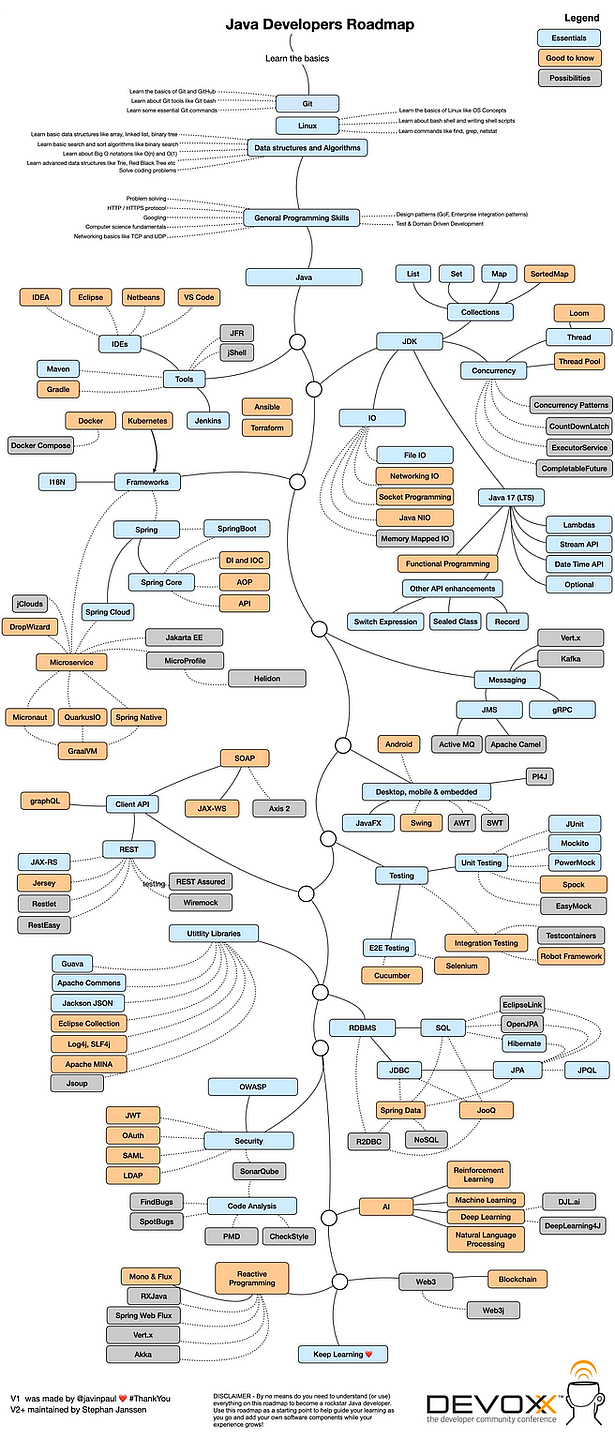
Earlier, I have shared the best Java courses, books, and websites and in this article, I am going to share a complete Java programmer RoadMap, which will tell you what it takes to become a professional Java developer and provide a comprehensive overview of all the tools, libraries, frameworks and skills you need to become a complete Java programmer in 2026.
Since Java is my expertise, It wasn’t a problem to create a Java Developer Roadmap, but it took slightly longer for me to create one because of the limited time I had.
Anyway, I am finally ready to share my Java developer RoadMap with you. This Roadmap contains my years of experience and the unobstructed path of how to become a Java expert.
You will find that this Java roadmap answers many burning questions like which technologies a Java developer should learn.What tools make you a better Java developer? And, which framework a Java developer must absolutely learn.
One of the things I tried with this roadmap is to keep the exposure as short as possible, I have avoided mentioning many alternatives, particularly when it comes to libraries and tools, and stick with industry-standard tools and libraries.
I have kept it simple so that most of the people can follow it and only included the essential stuff, but if there is enough desire, I am thinking of posting The Java Developer RoadMap 2.0 to add some advanced things like JVM internals, Profiling, Java 9 Modules, Cloud Native Java, different cloud platforms like AWS, GCP, or Azure, and more advanced tools like Chef for DevOps and much more.
If you are interested, you can find a more exhaustive list of separate blog posts, which I have listed in the further learning section. Anyway, let’s go through this Java Developer RoadMap to understand how to become a Java developer in 2026.
Btw, you by no means need to understand everything on this roadmap to become a rockstar developer.
You don’t even need to take them that seriously if you don’t want to. Instead, use these maps as a starting point to help guide your learning as you go.
Mandatory skill for any Java developers
Now, let’s go through this Java developer RoadMap step by step and find out how you can learn the essential skills required to become a Java Developer in 2026:
1. Git & GitHub
One of the most popular version control systems. It’s just not possible to live without Git anymore.
As a programmer, you should be familiar with Git and Github, essential Git concepts like a branch, master, checkout, checking, push, and pull, as well essential Git commands like git diff, git commit, etc.
I highly recommend Java programmers to learn Git and Github and if you already worked with Git then you can also level up your Git skills If you need a resource then you can check out The Git Complete Guide on Udemy to start with.
2. Linux
Not just a web developer but for any programmer, the Linux command line is very, very important, and I strongly recommend you to spend some time learning them.
Since most Java applications are server-side, you will often find them running on Linux servers.
That’s why it’s imperative for Java developers to be familiar with essential Linux concepts and commands related to files, disk space checking, process management, as well as networking commands.
If you need a resource to level up your Linux skills, I recommend checking out Linux Mastery: Master the Linux Command Line in 11.5 Hours course on Udemy. This is a great course for anyone who wants to learn Linux commands from scratch.
If you need more resources then you can use these free Linux courses to start learning Linux.
3. Data Structures and Algorithms
These are the building blocks of any program, and a good knowledge of Algorithms and Data Structure is vital for your next job or doing well in your current situation.
You should at least be familiar with essential data structures like an array, linked list, hash table, binary tree, queue, stack, and graph as well as problem-solving techniques like dynamic programming.
If you know advanced data structures like Trie, B-Tree, and AVL tree, then it’s well and good. But, if you don’t know, then I suggest you join a comprehensive course like Data Structures and Algorithms: Deep Dive Using Java, which will teach you everything about all those fundamentals.
4. HTTP / HTTPS
The HTTP protocol is the backbone of the web, and a good knowledge of both HTTP and HTTPS is mandatory for a web developer.
At least you should know about how HTTP and HTTPS work and what are different HTTP methods and their purposes etc.
If you are creating global applications that show information in many different languages across the world, then you should have a good knowledge of character encodings.
It’s a 3-part course on Computers, Programming, and Mathematics and essential for all kinds of programmers including Java developers. More than 39K people have already benefited from this program.
6. SQL
This is another common tech skill that every Java developer should learn as it will help you to troubleshoot back-end issues.
If you know SQL you can understand the stored procedure, query the database, and find out whether the issue is in the Java layer or the Database layer.
I highly recommend every Programmer whether a Java developer or a Python developer to learn SQL, it’s one of those skills that are easy to learn and serve you for a long time in your career as a programmer or developer.
Btw, you would need a ZTM membership to join this course which costs around $39 per month but also provides access to many super engaging and useful courses like his Java Programming Bootcamp: Zero to Mastery, which is a great resource to learn Java in-depth. You can also use my code FRIENDS10 to get a 10% discount on any subscription you choose.
There is no doubt that every programmer should know Git and Github as they are the standard in terms of version control and code repository.
If you want to learn and master Design Patterns, particularly OOP Design patterns then I suggest you join the Design Patterns in Java course by Dmitri Nestruk on Udemy.
This is a great course to learn the modern implementation of classic design patterns in Java.
If you need more resources, you can also check out my earlier articles about the best design patterns books, and courses to learn Object-Oriented Design patterns in depth.
The 2026 Java Developer RoadMap (with Resources)
Now, let’s explore this Java developer roadmap together and find out what tools, frameworks, libraries, APIs, tools, and skills you can learn to become a professional Java developer in 2026.
1. Tools
The tools section is divided into different sections. First, your IDE, which is your primary tool and can do almost everything you asked for like compile, run, debug, profile, test, compare files and code, refactoring, and much more.
1.1 IDEs
For Java Developers, there are two main IDES, Eclipse and IntelliJIDEA, you can choose any one of them as I have used Eclipse most of my life but I am currently working in IntelliJIDEA so I love both of them, but most Java developers I know they work in IDEA.
I suggest you master IDEA shortcuts, views, and all other features it offers to become a true Java Master and if you need a resource, I think IntelliJ IDEA Tricks to Boost Productivity for Java Devs is a great place to start with.
1.2 Build Tools
The second part is the build tool, which you need to build and deploy your projects like Maven and Gradle.
Any one of these would be enough. I have just listed ANT, but that’s for legacy projects.
For all new Java projects, prefer Gradle, it’s much more concise than Maven.
If you want to learn both Maven and Gradle, there are not many resources available. If you ask me, I recommend Apache Maven: Beginner to Guru by John Thompson on Udemy.
And, if you are keen to learn Gradle, I suggest you check out Gradle for Java Developers by another great Udemy instructor, Bharat Thippireddy.
1.3 Containers and DevOps Tools
And, the third and most crucial part includes containers like Docker and Kubernetes, CI/CD tools like Jenkins and TeamCity, and Infrastructure automation tools like Chef, Puppet, and Ansible.
Out of these Docker is the most important because it makes it easy to set up your development environment as well as it also makes the Deployment of Java Microservices easier.
Kubernetes is a next-level tool and not really needed for all Java developers, particularly if you are not in DevOps and managing things like scaling and deployment but it’s good to know from a knowledge perspective.
I suggest having good knowledge of Docker and basic knowledge of Kubernetes for Java developers and if you need resources, I recommend Maximillian SchwaurzMuller’s Docker & Kubernetes: The Practical Guide course on Udemy. You can learn both of these tools in one course.
If you are interested in learning about these tools, here are some useful courses to learn to build tools and IDEs
2. Java APIs
The next important thing to learn is JDK APIs, which are very, very important for any Java developer. This is quite a big section, and that’s why it’s divided into core areas like Java Collections framework, Java Concurrency, Java IO, and Java 8 APIs, let’s explore each of them
2.1 Java Collections Framework
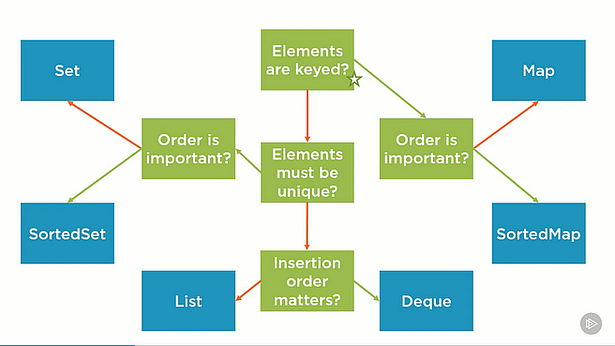
This is one of the most essential Java APIs every Java developer should learn. This API provides implementations of standard data structures in Java-like linked lists, sets, stacks, queues, hash tables, priority queues, and others.
At least you should know about all everyday objects like ArrayList, HashMap, HashSet, LinkedHashSet, TreeSet, etc.
Each of them has its different properties, for example, ArrayList is a dynamic array that can grow, and HashMap is a standard implementation of the hash table and can be used to store key-value pairs.
Similarly, HashSetis a set implementation that doesn't allow duplicate elements. I strongly suggest you check the Java Fundamentals: Collectionscourse to learn Java Collection Framework in depth.
2.2 Java Concurrency
After Java Collections, the next, most crucial API in Java is about multi-threading and concurrency, and I firmly believe that if you want to be a competent Java developer, you must have a solid understanding and command of Java Concurrency API.
You should not only have an in-depth understanding of fundamental concepts like Thread, Runnable, Object locking, and Synchronization, but you should also be familiar with concepts like deadlock, livelock, race conditions, and how to deal with them.
You should also learn about advanced Java concepts like synchronizers added on Java 5 and subsequent versions, I mean CyclicBarrier, CountDownLatch, Phaser, and CompleteableFuture, etc., along with Futures and how to perform the async operation in Java.
I know, it’s a lot of stuff, and that’s why I suggest you join an in-depth course like Java Concurrency in Practice bundle from Heinz Kabutz, a Java Champion, and authority when it comes to concurrency and design patterns. This course is a bit expensive, but you will learn a lot more concepts in-depth, which makes it completely worth your time and money.
On the other hand, if the price is an issue, you can also check this Udemy course — — Concurrency, Multithreading, and Parallel Computing in Java which won’t cost you more than $10 if you get it on Udemy flash sales which happens every month. This is also an excellent course to learn Java concurrency and multithreading in Java.
I have interviewed more than 100+ Java programmers, and I have noticed one pattern; they all have very little knowledge of Java IO and NIO APIs as compared to Java Collections and Java Multithreading API.
I can understand that many people spend a lot of time learning those two APIs, but you cannot leave behind these critical APIs.
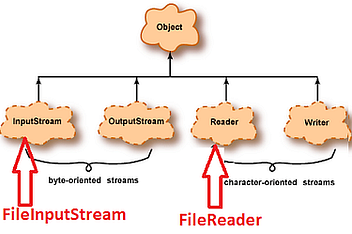
If you have to code a real-world, core Java application, you will need to use classes like File, InputStream, OutputStream, Reader, Writerfrom the java.io package, which is the core of the Java IO API.
Similarly, you also need to know about ByteBuffer, FileChannel, Selector, and other critical classes from java.nio API, if you want to write a socket-based application.
Unfortunately, there are not many dedicated resources on teaching Java IO and Java NIO API, but The Complete Java Masterclassis a great resource to master this API. You will find a lot of essential concepts from this API in this course.
2.4 Java 8 Features
Now, the next and another necessary API, a Java programmer, should learn is the Java 8 features, which has completely changed the way Java is coded and programmed nowadays.
Without knowing these APIs, it would be very tough to write a Java application in 205.
Most of the libraries also now stop supporting versions lower than Java 8, which means you have to learn Java 8 features now rather than later. It’s already 5 years since Java 8 was released, so you literally have no excuse left.
When it comes to learning Java 8 features, there are a lot of excellent resources available in the market.
While Java 8 features are essential for Core Java developers, if you can, please learn all other new features introduced from Java 9 to Java 13 like Modules, varfor local variables, static factory methods for collections, Text Blocks, Strings in Switch, and many more.
The best thing about Java is that it has a vibrant ecosystem, which means there are a lot of frameworks and libraries for almost anything.
Usually, I don’t suggest a Java developer learn a framework until he needs to use it in his project.
Still, there are some frameworks and libraries, which I believe every Java developer should know like Spring, Spring Boot, Hibernate, Log4j, JUnit, etc.
3.1 Spring Framework
If you want to become a Java developer in 2026, I strongly recommend you to learn Spring Framework first.
This is one of the most popular Java frameworks, and literally, almost every single Java application I have worked on in the last 5 years, uses this framework.
Spring Framework encourages writing clean code, which is easier to test and maintain by providing you with features like Dependency Injection and Inversion of Control.
It also has a rich API for most of the day-to-day tasks, and that’s why every Java developer should learn the Spring framework.
And, if you want to learn the Spring Framework, there is no better course than Spring Framework 6: Beginner to Guru. It covers Spring 6, the latest version of Spring 6, and teaches Spring in a more hands-on way than any other course.
3.2 Hibernate
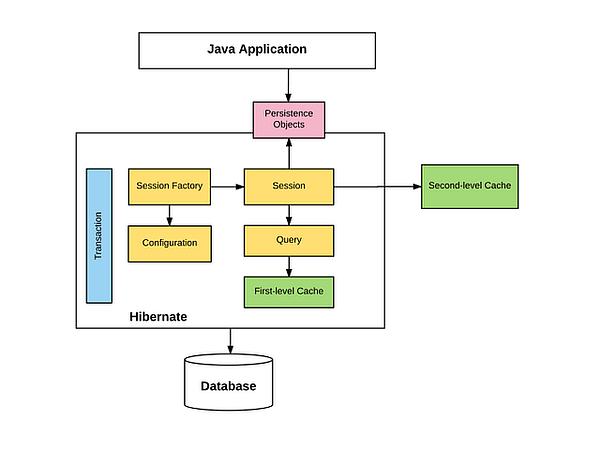
The second framework that I recommend every Java developer to learn is Hibernate, which is based on JPA (Java Persistence API).
To be accurate, Hibernate came before JPA, but because JPA is a standard API to implement the persistence layer in Java, Hibernate implements it.
Now, why should you learn Hibernate? Well, because most of the Java applications you will work with will interact with databases, it’s excruciating to deal with databases in Java using JDBC and without a proper framework like Hibernate.
It provides some of the essential features like Caching and Transaction out-of-the-box, which means you have more time to focus on your application logic than implementing caching in your application.
This seriously improves the performance of Java applications, and so far, my most significant reason to use Hibernate.
Now, when it comes to learning Hibernate there are many great resources available in the market, but the Spring & Hibernate for Beginners course is my preferred one because you can kill two birds from one stone, you can learn both Spring and Hibernate in one class rather than joining separate courses for them.
Btw, if you truly want to master Hibernate or looking for an advanced Hibernate course then Vlad Mihalcea’s High-Performance Java Persistencebook and the course are the best resources for anyone.
This is another framework I recommend every Java developer to learn in 2026 and going forward. Spring Boot took Spring’s philosophy of simplification and made it easy to work with Spring itself.
Just like Spring makes it easier to create a Java application, Spring Boot makes it easier to create a Spring-based Java application.
Features like auto-configuration take away most of the pain associated with configuring the Spring application. Similarly, starter POM features grouped commonly used dependencies into simple reusable POMs.
Now, if you want to learn Spring Boot, I strongly suggest you go through the Learn Spring Boot in 100 Steps course; it’s one of the best and most up-to-date and also provides step-by-step guides for everyday things a Spring Boot developer needs to know.
3.4 Java Microservice Frameworks — — MicroProfile, Micronaut, and Quarkus
While learning Spring Boot and Spring Cloud is sufficient for developing Microservices in Java, there are a couple of more advanced frameworks you can explore, like Eclipse’s Microprofile, Micronaut, and Quarkus.
Quarkus is one of the promising frameworks for Java developers. It’s a Kubernetes Native Java stack tailored for OpenJDK HotSpot and GraalVM, crafted from the best-of-breed Java libraries and standards.
Quarkus tailors your application for GraalVM and HotSpot to get Amazingly fast boot time and incredibly low RSS memory (not just heap size!).
It also provides instant scalability and high-density memory utilization in container orchestration platforms like Kubernetes using a technique called compile-time boot.
You can also use both the familiar imperative code and the non-blocking reactive style when developing applications for Quarkus.
In short, one of the best platforms for Java developers to create an application and something worth learning in 2026, and if you want to learn Quarkus and need a resource then Quarkus Backend development with Java and GraalVM is a great one to start with.
It’s an initiative that aims to optimize Enterprise Java for Microservice Architecture. It’s driven by Eclipse, one of the leading organizations of Java, and the company behind the popular Eclipse IDE.
The goal of Eclipse of MicroProfile is to define standard APIs for building microservices and deliver portable applications across multiple MicroProfile runtimes.
The current version of Eclipse Microprofile is 7.0, and it’s a useful Java framework to learn in 2026.
This is another Java framework you can learn in 2026. Micronaut is a modern, JVM-based, full-stack framework for building modular, easily testable microservice and serverless applications.
It’s a polyglot framework and allows you to create an application using Java, Kotlin, or Groovy. Some of the key talking points of Micronaut are reduced startup time, blazing-fast throughput, and minimal memory footprint.
If you want to learn more about MicroNaut, you can also check out Learn Micronaut — — cloud-native microservices with Java course on Udemy. There are not many courses but this one and MicroNaut documentation are sufficient to start developing applications with MicroNaut.
4. Testing
Testing is an essential skill for any Java developer, particularly unit testing, integration testing, and automation testing.
At the bare minimum, every Java developer should be familiar with JUnit and Mockito, two of the most popular Unit testing and Mock libraries.
If you know these two and know how to use them to effectively create a unit test, you will be a much better Java developer than without them.
There are more advanced libraries that also exist like Cucumber for Business-driven testing and Robot Framework for integration testing, but there is no substitute for JUnit, you will always need that.
When it comes to a mocking library, you have a couple of choices like PowerMock, Mockito, and EasyMock.
Still, I strongly suggest you learn Mockito because it’s a vast library, and also many Java developers and companies are doing that. It is slowly becoming the standard library for creating mock objects in Java.
If you want to learn JUnit and Mockito from scratch, then I also suggest you join Learn Java Unit Testing with Junit & Mockito in the 30 Steps course by In28Minutes on Udemy. It’s a practical and hands-on course to get started with both these libraries.
If you need more options than you I have already shared a lot of resources like books and courses, you can check those to learn more.
5. Utility Libraries
The real power of Java lies in its vibrant ecosystem of open-source libraries. You will find libraries to do almost anything in Java from logging to machine learning, from sending an HTTP request to parsing JSON, and much more.
Apart from that, Java is also lucky to have utility libraries like Apache Commons and Google Guava, these two libraries effectively complement JDK libraries. I have also shared a list of 20 Java APIs and libraries for Java developers.
I suggest you go through that list, chances are that you already have half of them but if you don’t learn them they are very, very useful and help you to write better Java programs and deliver faster.
6. Database
Database access is an important part of many Java applications and thankfully Java comes with JDBC (Java Database Connectivity) API Which provides a standard set of APIs for connecting to any relational database.
As an application developer, you just need to know the API as all vendors provide an implementation of those APIs. You just need to include their JAR file into the classpath and your code will work fine.
By the way, JDBC is not the only option to interact with the database, there are open-source libraries like JOOQ that can help you to write SQL queries in Java.
jOOQ generates Java code from your database and lets you build type-safe SQL queries through its fluent API
7. Desktop and Frontend
Java offers great APIs like Swing and Java FX for developing GUI clients. Swing was popular a couple of years back but C# has now taken the lead Java FX is another popular Java API for developing GUI applications in Java.
If you want to develop a GUI application like NetBeans, one of the famous Java editors which are also written in Java then you can learn Java FX in 2026.
I wouldn’t advise learning Swing unless you are working for a bank that is paying you thousands of dollars per month maintaining their Swing-based trading GUI.
If you want to learn Java FX in 2026 and need a resource then you can also check out the Java FX Concepts Bootcamp 2026 course on Udemy.
You can also build and deploy Java FX applications on Raspberry PI, one of the small but powerful computers. If you are interested in that,Frank Delporte has a great course Use Java and Java FX on a Raspberry PI for beginners. You can take a look at that course to start with.
Best Resources to Learn Java Programming in 2026
Now that we know in depth what individual skills, tools, and libraries are used in the Java world and what you can learn to become a professional Java developer, it is now time for the most important thing in this RoadMap, the resources to actually learn Java programming.
So, here are the best resources which include, online courses, books, and online platforms you can join to learn Java programming in depth.
1. Best Java Online Courses
Online Courses are one of the best ways to start learning any new technology or programming language and Java is no exception.
There are thousands of Java courses available online but not everything is good. Many of them are outdated or don’t cover Java in enough depth.
So, I have shortlisted the following Java programming courses anyone can join to start with Java programming language, it includes courses from popular learning platforms like Udemy, Coursera, Educative, Zero to Mastery Academy, and more:
Now that we have seen all the important online Java courses, it’s time to check the books as they also play an important role in shaping a Java developer’s career.
When I started learning Java, I started with books that were very hard to read, lengthy, and boring but they had computer programs that I could copy and run.
At that time, I mean during the 1990s and early 2000s that’s probably the best way to learn Java but nowadays you have access to so many resources like interactive coding websites and courses which I have shared in the previous section so you don’t need to read those boring books.
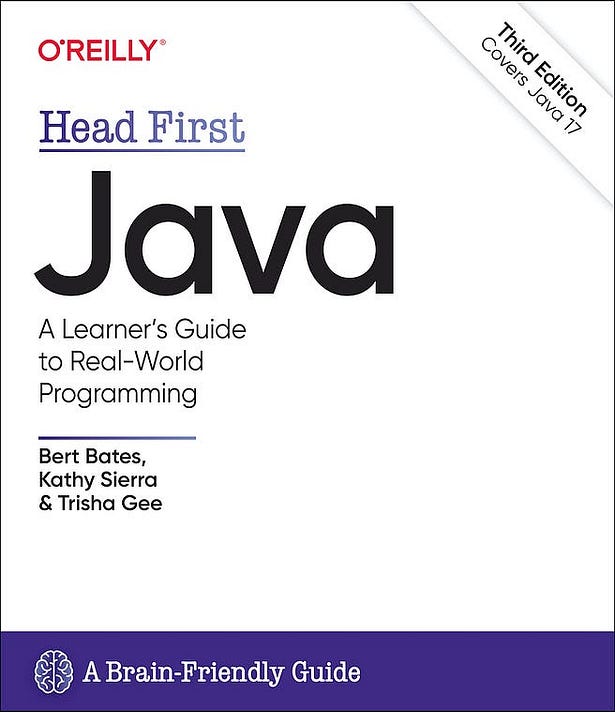
Instead, you can pick interesting books to learn and master Java like the one I have shared below:
That’s all about the 2026 Java Developer Roadmap. This is an excellent resource to learn Java in 2026 and become a better Java developer. I have kept it simple so that most people can follow it and only included the important stuff.
Please consider subscribing to this blog if you’d like to be notified of every new post, and don’t forget to followjavarevisited on Twitter!
All the best for your Java Development Journey !!
P. S. — If you are a complete beginner in Java and looking for a free online course to learn Java online then you can also check out the Java Tutorial for Complete Beginners(FREE) course on Udemy. It’s completely free and more than 1.2 million people have joined this course to learn Java online.